Search
Changes to Direct Filing Addresses for Certain H-1B Form I-129 Petitions
On Sept. 1, we will change the direct filing addresses for certain petitioners filing Form I-129, Petition for a Nonimmigrant Worker. The changes apply to the following cap-exempt H-1B petitions:
USCIS Will Accept H-1B Petitions for Fiscal Year 2017 Beginning April 1, 2016
On April 1, 2016, U.S. Citizenship and Immigration Services (USCIS) will begin accepting H-1B petitions subject to the fiscal year (FY) 2017 cap. U.S. businesses use the H-1B program to employ foreign workers in occupations that require highly specialized knowledge in fields such as science, engineering and computer programming.
The congressionally mandated cap on H-1B visas for FY 2017 is 65,000. The first 20,000 H-1B petitions filed for individuals with a U.S. master’s degree or higher are exempt from the 65,000 cap.
USCIS Reaches FY 2017 H-1B Cap
U.S. Citizenship and Immigration Services (USCIS) has reached the congressionally mandated H-1B cap for fiscal year (FY) 2017. USCIS has also received more than the limit of 20,000 H-1B petitions filed under the U.S. advanced degree exemption.
USCIS will use a computer-generated process, also known as the lottery, to randomly select the petitions needed to meet the caps of 65,000 visas for the general category and 20,000 for the advanced degree exemption.
USCIS Completes the H-1B Cap Random Selection Process for FY 2017
U.S. Citizenship and Immigration Services (USCIS) announced on April 7, 2016, that it has received enough H-1B petitions to reach the statutory cap of 65,000 visas for fiscal year (FY) 2017. USCIS has also received more than the limit of 20,000 H-1B petitions filed under the advanced degree exemption, also known as the master’s cap.
Fiscal Year 2017 H-1B Cap Premium Processing to Begin May 12
On May 12, 2016, U.S. Citizenship and Immigration Services (USCIS) will begin premium processing for cap-subject H-1B petitions requesting premium processing, including petitions seeking an exemption for individuals with a U.S. master’s degree or higher.
Recording of Free Community Conference Call (Every Other Thursday), Jan 11, 2018
Immigration.com
Nonimmigrant Visas
Green Card
Discussion Topics, Thursday 11 January 2018:
FAQ: Submitting adjustment of status, form I-485, When the applicant is in between projects/not working || H-4 EAD rules change and H-1B extensions rules change || Change in job title after getting a green card approval || Transferring H-1B while an RFE is pending || How to find an accredited university to get Master’s degree to process an EB-2 green card. Other: Wage requirements under the H-1B LCA ||Converting back to H-1B from a compelling circumstances EAD ||Extending H-1B from outside the USA with an approved I-140 || RFE pending delay in an adjustment of status case || Applying for adjustment of status while in authorized period of stay||Status while an H-1B extension spending ||Questions about EB-5 green card through investment/investment visa ||H-1B quota exemption if approved within
USCIS to Resume H-1B Premium Processing for Physicians under the Conrad 30 Waiver Program
U.S. Citizenship and Immigration Services announced today that starting Monday, June 26, the agency will resume premium processing for all H-1B petitions filed for medical doctors under the Conrad 30 Waiver program, as well as interested government agency waivers.
USCIS to Resume H-1B Premium Processing for Certain Cap-Exempt Petitions
U.S. Citizenship and Immigration Services (USCIS) will resume premium processing for certain cap-exempt H-1B petitions effective immediately. The H-1B visa has an annual cap of 65,000 visas each fiscal year. Additionally, there is an annual “master’s cap” of 20,000 petitions filed for beneficiaries with a U.S. master’s degree or higher.
Premium processing will resume for petitions that may be exempt from the cap if the H-1B petitioner is:
* An institution of higher education;
* A nonprofit related to or affiliated with an institution of higher education; or
Recording of Free Community Conference Call (Every Other Thursday), August 10, 2017
Immigration.com
Nonimmigrant Visas
Discussion topics:
EAD Renewals, prevailing wages for Illinois, H-1B transfer, F2A category Green Card, Rules changed on LCA,
Point system - how it will affect those who are already waiting for Green Card.
New Direct Filing Addresses for L, O, and P Nonimmigrant Petitions for Beneficiaries in Florida, Georgia, and North Carolina
USCIS has changed the direct filing addresses for where to file certain forms for beneficiaries who will be working or training in Florida, Georgia, or North Carolina. The changes are as follows:
USCIS Expands Credit Card Payment Pilot Program to Vermont Service Center
As part of the credit card payment pilot program, the Vermont Service Center is now accepting credit card payments using Form G-1450, Authorization for Credit Card Transactions, for petitioners filing Form I-129, Petition for a Nonimmigrant Worker, for O and P nonimmigrants.
P Visa Processing times & status checks
Processing Times
- USCIS Service Center Processing Times
- California Service Center
- Nebraska Service Center
- Texas service Center
- Vermont Service Center
Nonimmigrant Visas
Waivers of the Interview Requirement for Certain Nonimmigrant Visas
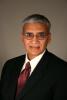
For latest updates, watch this video with Rajiv from Dec 28, 2021.
DOL Updates FAQ on Prevailing Wages for H-1B, H-1B1, and E-3 Programs
The Office of Foreign Labor Certification has posted new and updated Labor Condition Application (LCA/ ETA Form 9035/9035E) Frequently Asked Questions (FAQs) for the H-1B, H-1B1 and E-3 programs.
For the new FAQs click here.
I-140 EAD Regulations Effective 17 January 2017

2 December 2016
Radio Show Discussing Overview of the new I-140 EAD Regulations
2 December 2016
Discussing I-140 EAD FAQ in community conference call
USCIS Will Accept H-1B Petitions for Fiscal Year 2018 Beginning April 3
U.S. Citizenship and Immigration Services will begin accepting H-1B petitions subject to the fiscal year 2018 cap on April 3, 2017. All cap-subject H-1B petitions filed before April 3, 2017, for the FY 2018 cap will be rejected.
USCIS Guidance on When to File an Amended H-1B Petition after the Simeio Solutions Decision
On April 9, 2015, USCIS’ Administrative Appeal Office (AAO) issued a precedent decision, Matter of Simeio Solutions, LLC, which held that employers must file amended H-1B petitions when a new Labor Condition Application for Nonimmigrant Workers (LCA) is required due to a change in the H-1B worker’s worksite location. Specifically, the decision stated:
DOL Updates – 05/19/09
DOL persuades users to use the new iCERT
The old LCA system will be extended by DOL starting from May 14, 2009 to June 30, 2009. Hence DOL urges users to use the new iCERT during the transition period and to send a feedback on bugs by email.
Some of the new features implemented by DOL with the launch of the new system
USCIS Temporarily Accepts H-1B Petitions Without DOL Certified LCA
U.S. Citizenship and Immigration Services (USCIS) is announcing a 120-day period in which it will temporarily accept H-1B petitions filed without Labor Condition Applications (LCAs) that have been certified by the Department of Labor (DOL).
USCIS Memorandum on Acceptance of H-1B Petitions without Certified LCAs
Please see the attached memorandum released by the USCIS on Dec 10,09.
CIS Ombudsman Issues Recommendation to USCIS on Temporary Acceptance of Filed Labor Condition Applications (LCAs) for Certain H-1B Filings
CIS Ombudsman released a recommendation on "Temporary Acceptance of Filed Labor Condition Applications (LCAs) for Certain H-1B Filings."
Please check attachment for detailed information.
P Visa Overview
The P-Visa category covers entertainers and athletes who cannot qualify under the extraordinary ability standard for the O-category. The P-1 category is set aside for:
1. Alien athletes who compete individually or as part of a team at an internationally recognized level; and
Nonimmigrant Visas
USCIS Clarifies Requirements For Agents Filing as Petitioners For the O and P Visa Classification
U.S. Citizenship and Immigration Services (USCIS) issued guidance on October 7, 2009 to clarify for performing arts associations and their members the regulatory requirements for agents who file as petitioners for the O and P visa classification.
O and P visas apply to non-immigrants with extraordinary ability in the sciences, arts, education, business or athletics, or in the motion picture and television field. O and P petitions may only be filed by a U.S. employer, a U.S. agent, or a foreign employer through a U.S. agent.