Guestbook Entry for Kashif Bootwala, United States
Name
Kashif Bootwala
Country
United States
State
CA

A physical therapist, who wishes to apply for an Immigrant Visa (Permanent Resident Status) coming to the United States to perform labor in covered health care occupations (other than as a physician) requires:
US Work and Immigration Options for Foreign Professionals

We assisted in the filing of an H-1B petition for a newly established company in the healthcare industry for a computer and information systems manager. We received a request for evidence (RFE), asking for details about the employer and questioning the employee’s qualifications. Oddly, the RFE specifically questioned the credentials of the professor, who had assessed the employee’s educational background and experiential qualifications.
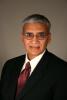
Preliminary Note: The following discussion examines National Interest Waiver, other than that for foreign physicians. The nature of NIW for foreign physicians is different and requires a separate discussion.
We obtained an O1 for an applicant who achieved a Master in Bonsai technique. He had apprenticed under one of the premier experts in Japan. We offered letters from field experts praising the applicant's work and noting his extraordinary artistic abilities. We also provided documentation of the applicant's participation as a trade show "featured artist" which is an honor only bestowed on the very best in the field.
We won this case based on the applicant's critical role in a key U.S. Air Force project. His level of expertise in this specialized field was highly sought after and necessary to achieve the military's objectives. We provided letters from experts in the Air Force stressing their need to keep the applicant on the project or else it would fail.
We won this case by providing evidence of the impact of the work this applicant was conducting in her field. Numerous referees provided detailed recommendation letters outlining the necessity for the continued efforts of this applicant. Her teaching capabilities were noted as being far superior to others in her field. This applicant's unique background was shown to be scarce in the United States.